
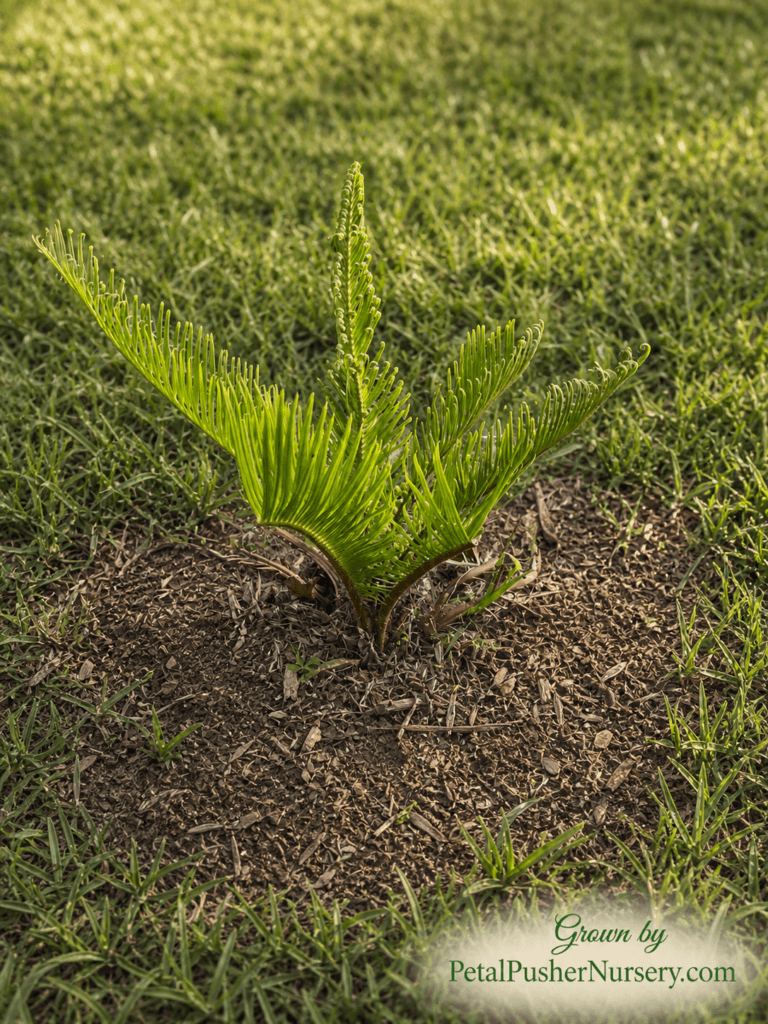
Sago Palm 101: How to Grow, Groom, and Multiply Your Living Fossils
Sago Palms (Cycas revoluta) are fascinating “living fossils.” Despite the name, they aren’t actually palms—they are cycads, meaning they reproduce using cones rather than flowers and seeds, just as they did in the era of the dinosaurs.
At a Glance: Sago Quick Stats
● Hardiness Zones: 8–11
● Light: Full sun to partial shade
● Growth Rate: Extremely slow (about 1″ of trunk per year)
● Watering: Low (Drought-tolerant once established)
1. Maturity: When do they produce “babies”?
A Sago Palm typically needs to be 15 to 20 years old before it reaches reproductive maturity. In the world of Sagos, “babies” usually refer to offsets (pups) that grow at the base of the trunk. While pups can occasionally appear on younger plants if the parent is stressed, consistent pup production and the ability to produce seeds generally wait until the plant is a couple of decades old.
2. Identifying Male vs. Female
Sago Palms are dioecious, meaning an individual plant is either male or female. You must wait for the “cone” to appear in the center (usually in late spring) to know the gender.
Feature | Male Sago | Female Sago
|
Structure | An upright, elongated golden cone. | A rounded, fluffy “basket” of leaves. |
Size | Can grow 12–24 inches tall. | Lower profile, sits nestled in the crown. |
Function | Produces pollen. | Produces seeds (if pollinated). |
3. How to Propagate (Multiply) Your Sago
There are two primary ways to grow new Sagos:
Method A: Removing Offsets (Pups)
● Identify & Separate: Find bulb-like growths at the base. Use a sterilized knife to pop them off.
● Prepare: Trim any leaves off the pup. Let the “wound” dry (callous) in the shade for a few days to prevent rot.
● Plant: Use well-draining succulent mix. Bury the pup halfway.
● Water: Water once, then only when the soil is completely dry.
Method B: Growing from Seed
● Harvest & Soak: Collect orange seeds in winter. Soak in water for 24 hours, remove the husk, then soak the hard nut for another 24 hours.
● Sow: Lay seeds horizontally in moist sand, half-covered.
● Patience: Germination takes 3 to 6 months.
4. How to Groom for Health and Beauty
Grooming is about maintenance and safety. Because they grow slowly, less is more.
● The “Brown and Down” Rule: Only remove fronds that are completely brown. If they are yellow, the plant is still extracting nutrients. Never cut healthy green fronds.
● The Proper Cut: Use sterilized pruners. Cut as close to the trunk as possible to create that iconic “diamond” texture.
● The “Pineapple” Look: For a manicured aesthetic, you can trim the bottom rows, but always leave at least 2–3 full rings of green leaves at the top.
● Safety: Always wear heavy-duty gloves and eye protection. Sago spines are sharp!
5. Health, Hazards, and “The Clean Trunk”
● Nutritional Health: If new leaves emerge yellow or frizzy (“Frizzle Top”), your plant likely has a Manganese deficiency. Use a Manganese Sulfate soil drench to fix it.
● Pest Alert: If the plant looks like it’s covered in flour, it may have Asian Cycad Scale. Treat immediately with horticultural oil.
● Trunk Maintenance: A gentle blast from a garden hose once a month keeps the trunk debris-free and the “diamond” pattern looking sharp.
⚠️ Vital Warning for Pet Owners
Sago Palms contain cycasin, a potent toxin. Every part of the plant—especially the seeds and pups—is highly toxic to pets and humans. Never ingest any part of the plant, and keep pups and seeds out of reach of curious dogs.
Patience is Key: Sago gardening is a “long game.” A pup might not show new growth for months, and seeds take a long time to sprout. Don’t give up—you are growing a piece of history!
Have you successfully sprouted a Sago pup? Share your photos or questions in the comments below!