
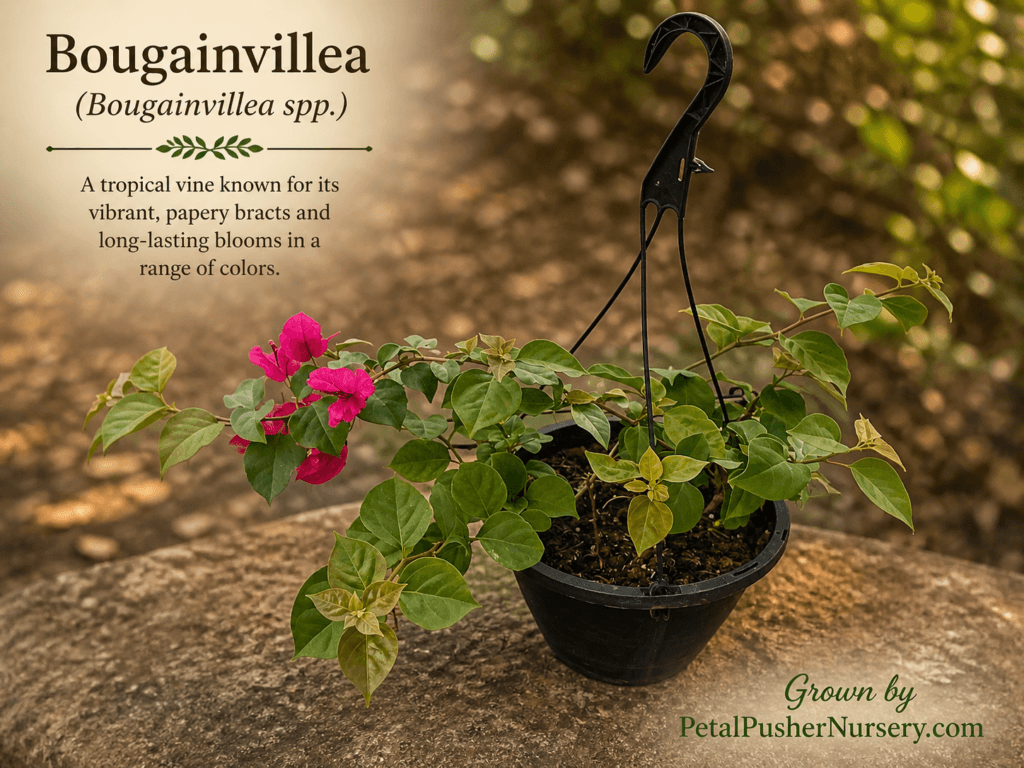
The Living Fire: The Ultimate Guide to Growing and Mastering Bougainvillea
There are few sights in the botanical world as arresting as a Bougainvillea in full bloom. Often referred to as the “Paper Flower” due to its delicate, parchment-like bracts, this plant doesn’t just grow—it commands attention. Whether cascading over a wrought-iron balcony in New Orleans or lighting up a desert garden in Arizona, the Bougainvillea is the undisputed monarch of the sun-drenched landscape.
In this guide, we will explore the fascinating history of this tropical titan, why it has become the floral heartbeat of the Southern United States, and how you can master the art of growing it in your own backyard.
A Voyage of Discovery: Where Did Bougainvillea Originate?
The story of the Bougainvillea is one of high-seas adventure and 18th-century intrigue. The plant is native to the tropical and subtropical regions of South America, specifically Brazil, Peru, and Argentina.
It remained a local secret until 1768, when French Admiral Louis Antoine de Bougainville embarked on a journey to circumnavigate the globe. Onboard was the botanist Philibert Commerçon, who is officially credited with the discovery. However, modern history gives the real credit to Commerçon’s assistant, Jeanne Baret.
Because women were strictly forbidden on French Navy ships, Baret disguised herself as a man for the duration of the voyage. It is believed that she was the one who first collected the vibrant specimens in Rio de Janeiro. This makes the Bougainvillea not just a beautiful plant, but a symbol of pioneering spirit and the first woman to ever circle the globe.
Why the American South? A Perfect Horticultural Match
When we traveled through the “Sun Belt”—from Florida and the Gulf Coast across to Texas and Southern California—the Bougainvillea was everywhere. Its dominance in these regions isn’t a coincidence; it’s a result of the plant’s biological requirements meeting the American climate.
1. The Heat Factor
Bougainvilleas thrive in USDA Hardiness Zones 9 through 11. They are “thermophilic,” meaning they don’t just tolerate heat; they require it to produce their signature colors. The long, humid summers of the South provide the exact oven-like conditions the plant needs to trigger its bloom cycles.
2. Drought Tolerance and Soil
The Southern US often faces periods of intense heat and dry spells. Once a Bougainvillea is established, it is remarkably drought-tolerant. In fact, it actually blooms better when it is slightly water-stressed. The well-drained, often sandy soils of the coastal South prevent the one thing this plant hates most: “wet feet” or root rot.
3. Aesthetic Synergy
The plant’s Mediterranean flair perfectly complements the Spanish Colonial, French Creole, and Mission-style architecture prevalent in these states. A white stucco wall is the perfect canvas for a splash of neon magenta Bougainvillea.
The Golden Rules of Care: Sun, Water, and Stress
To grow a successful Bougainvillea, you must understand its personality. It is a rugged, somewhat rebellious plant that thrives on a bit of “tough love.”
Sunlight: The Non-Negotiable
If there is one thing you remember from this guide, let it be this: Bougainvillea loves the sun. To produce vibrant color, it requires at least 6 hours of direct, unfiltered sunlight per day. When it is put in the shade, the plant will become “leggy,” growing long, thin green vines with plenty of leaves but zero flowers. If your plant isn’t blooming, it’s almost certain because it’s looking for more light.
Watering: Less is More
Over-watering is the most common cause of Bougainvillea failure. You should water the plant deeply, then allow the soil to dry out completely before watering again. If the plant stays constantly moist, it will focus all its energy on green leaf growth rather than colorful bracts. Just remember, less is more.
The Secret of the Bract
A common misconception is that the colorful parts of the plant are flowers. They are actually modified leaves called bracts. The actual flower is the tiny, white, inconspicuous trumpet-shaped bloom nestled in the center of the bracts.
How Large Do They Get?
The size of a Bougainvillea depends entirely on the variety and how you manage it.
● Climbing Vines: Standard varieties are aggressive climbers. Using their sharp, woody thorns to hook onto supports, they can easily reach 20 to 30 feet in height.
● Shrubs and Hedges: With regular pruning, they can be maintained as dense, 5-foot-tall privacy hedges.
● Dwarf Varieties: Modern cultivars like the “Helen Johnson” or “Pixie” stay compact, usually topping out around 2 to 3 feet, making them ideal for containers.
Propagation: Growing Your Garden for Free
Why buy ten plants when you can grow them from one? Bougainvilleas are most easily propagated through semi-hardwood cuttings.
1. The Cut: In late spring or summer, cut a 6-inch segment from a healthy stem that is turning from green to brown (semi-hardwood).
2. Preparation: Strip the leaves from the bottom half and dip the cut end into rooting hormone.
3. The Medium: Plant the cutting in a mix of peat moss and perlite.
4. The Environment: Cover the pot with a clear plastic bag to create a “mini-greenhouse” effect. Keep it in a warm, bright spot out of direct sunlight.
5. Patience: Roots usually take 4 to 8 weeks to establish. Once you see new green growth, you’ve succeeded!
Creative Landscape Ideas
Bougainvilleas are incredibly versatile. Here are a few ways to use them:
● The Security Barrier: Because of their formidable thorns, a Bougainvillea hedge is a beautiful but effective way to discourage intruders from climbing fences.
● Standard “Trees”: You can train a single-trunk Bougainvillea into a stunning “tree” or topiary.
● Bonsai: Their woody nature and spectacular color make them one of the most popular choices for tropical bonsai enthusiasts.
● Espalier: You can “paint” your house with flowers by training the vines to grow in a specific geometric pattern against a flat wall.
Frequently Asked Questions (FAQ)
Question | Answer |
Is Bougainvillea poisonous? | The plant is considered mildly toxic. The sap can cause skin irritation in some people, and if ingested by pets, it can cause mild stomach upset. Always wear gloves when pruning! |
Why are the leaves falling off? | This is usually due to a sudden change in temperature or over-watering. They are frost-sensitive; a light frost may cause leaf drop, but the plant often recovers in spring. |
What is the best fertilizer? | Use a balanced, slow-release fertilizer with a high potassium content (the third number on the N-P-K label). Avoid high-nitrogen fertilizers. |
Final Thoughts for the Home Gardener
The Bougainvillea is a plant that rewards the bold. It doesn’t want to be coddled; it wants to be baked in the sun, ignored by the garden hose, and occasionally hacked back with pruners. If you provide it with the heat it craves, it will reward you with a display of color so intense it looks like the garden is on fire.